Cisco Switch Images For Gns3


Наши тексты создаются людьми, а не ИИ. Читать больше
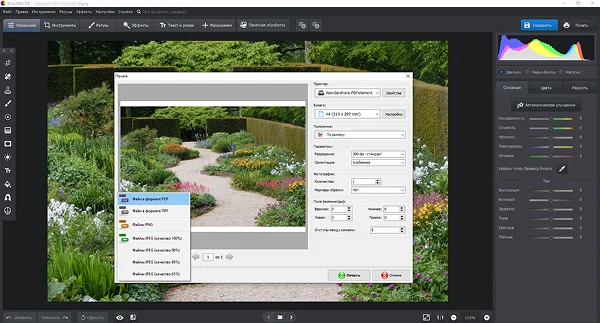
Как конвертировать JPG в PDF?
В ФотоМАСТЕРе это легко:
1 Откройте фотографию.
2 Нажмите кнопку «Печать».
3 Укажите нужный формат – ПДФ.
4 Сохраните результат в любую папку.
Here are a few options for "good text" regarding Cisco switch images for Gns3, tailored for different contexts (such as a blog post, a YouTube description, or a technical guide). Option 1: The "Quick Start" Guide (Best for a tutorial intro) Title: Setting Up Cisco Switch Images in GNS3: The Complete Guide Building a realistic network lab requires the right tools. While GNS3 is famous for routing, switching support has evolved significantly over the years. To get true switching functionality in your topology, you need to move beyond the default "EtherSwitch Router" and utilize dedicated Layer 2 images. For most users, the Cisco 3725 or Cisco 3745 router platforms, configured with a switching module (NM-16ESW), offer the best balance of stability and features for CCNA studies. However, for advanced Layer 3 switching and CCNP/CCIE labs, the Cisco IOL (IOS on Linux) images are the industry standard, offering native switching commands without the overhead of a router chassis. Below, we walk you through the setup, from downloading the correct IOS binaries to calculating the required Idle-PC values for optimal performance.
Option 2: The "Best Practices" Breakdown (Best for a technical article) Title: Which Cisco Switch Image Should You Use in GNS3? Not all switch images are created equal. When designing your GNS3 topology, it is critical to choose the correct image type to match your learning objectives: 1. The "EtherSwitch" Module (Router-based)
Hardware: Cisco 3725 or 3745 Router + NM-16ESW Module. Pros: High stability, easy to set up in the GNS3 VM. Cons: Limited command set; commands are often "hidden" or differ from real Catalyst switches (e.g., no switchport behavior). Verdict: Great for basic VLAN and trunking labs, but frustrating for advanced configuration.
2. Cisco IOL (IOS on Linux)
Hardware: L2 or L3 IOL images (often called i86bi_linux_l2... ). Pros: The closest experience to real hardware. Supports almost all Layer 2 and Layer 3 switching features (LACP, VTP, HSRP, etc.). extremely lightweight. Cons: Requires a specific license/setup; technically meant for internal Cisco use only. Verdict: The gold standard for GNS3 switching labs.
3. The IOU (IOS on Unix) Option
Similar to IOL, these are older Solaris-based images that run efficiently within the GNS3 VM environment, perfect for complex topologies where CPU resources are limited. cisco switch images for gns3
Option 3: SEO-Optimized Description (Best for YouTube or Download pages) Title: GNS3 Cisco Switch Images – Download and Configuration Looking to master Cisco switching without buying physical hardware? In this guide, we provide the essential Cisco Switch images required to build your GNS3 virtual lab. Whether you are preparing for your CCNA, CCNP, or just testing a network design, having the right Layer 2 and Layer 3 switch image is crucial. We cover the installation of the popular Cisco 3725 Router with Switch Module , as well as the highly sought-after Cisco IOL Layer 2 images . Learn how to integrate these images into the GNS3 GUI, troubleshoot common "unaccessible" errors, and optimize your CPU usage with the correct Idle-PC settings. Stop using the limited GNS3 built-in nodes and start using real Cisco IOS logic today.
Option 4: Short & Punchy (Best for Social Media or Forums) Subject: Stop using routers as switches! If you are studying for your Cisco exams, you know the pain of GNS3 switching. Standard router images just don't cut it for VLAN trunking and STP labs. To get real switching behavior in GNS3, you need the right IOS images. We recommend utilizing Cisco IOL (L2 & L3) images for the most authentic experience. They are lightweight, support almost every command on the blueprint, and are far superior to the older 3725/NM-16ESW setup. Check the guide below to get your lab up and running.
Cisco switch images for GNS3 are essential tools for network engineers, though their performance and features vary significantly depending on which image type you use. Since GNS3 does not provide these images directly due to legal requirements , your experience will depend on whether you use legacy IOS, IOU, or modern VirL/CML images. GNS3 Documentation Types of Cisco Images for GNS3 IOSv-L2 (Cisco Modeling Labs/VIRL) Here are a few options for "good text"
You can use this as a draft for a technical paper, blog post, or lab documentation.
Cisco Switch Images for GNS3: Challenges, Solutions, and Best Practices Abstract GNS3 (Graphical Network Simulator) is widely used for network emulation, but it traditionally excels at emulating Cisco routers. Emulating Cisco switches, especially Layer 2 switches, presents unique challenges due to hardware-specific ASICs. This paper examines the types of Cisco switch images available for GNS3, the legal and technical hurdles involved, and the most effective methods for achieving functional switching topologies, including the use of IOU (IOS on Unix), IOL (IOS on Linux), and Ethernet switch modules. 1. Introduction Network engineers use GNS3 to practice for certifications (CCNA, CCNP, CCIE) and test configurations. While routers run seamlessly via Dynamips or QEMU, switches require special handling because switching functions (like STP, VLANs, and EtherChannel) rely on hardware logic not easily emulated. 2. Types of Cisco Switch Images 2.1 Dynamips (Etherswitch Module)

Оставьте ваш комментарий