

-

Tina

-

Alice

-

Amy

-

Vita

Not all horizontal lines are Kerley B lines. Radiologists must differentiate them from:
When interpreting Kerley B lines on a CXR, consider the patient's clinical history and symptoms, such as:
| Line Type | Description | Location | Significance | | :--- | :--- | :--- | :--- | | | Long (2–6 cm), non-branching lines. | Central/Radiating from the hila. | Deep septal thickening; often seen in acute pulmonary edema or sarcoidosis. | | Kerley B Lines | Short (1–2 cm), horizontal lines. | Peripheral/Subpleural (base of lungs). | Interlobular septal thickening; classic sign of pulmonary edema. | | Kerley C Lines | Fine, reticular (net-like) interlacing lines. | Basal lung zones. | Likely represent a superimposition of many Kerley B lines. |
They extend all the way to the edge of the lung (the visceral pleura). Pathophysiology
The identification of Kerley B lines often serves as an early warning sign in clinical practice.
Understanding why Kerley B lines appear requires an understanding of lung anatomy:
Not all horizontal lines are Kerley B lines. Radiologists must differentiate them from:
When interpreting Kerley B lines on a CXR, consider the patient's clinical history and symptoms, such as:
| Line Type | Description | Location | Significance | | :--- | :--- | :--- | :--- | | | Long (2–6 cm), non-branching lines. | Central/Radiating from the hila. | Deep septal thickening; often seen in acute pulmonary edema or sarcoidosis. | | Kerley B Lines | Short (1–2 cm), horizontal lines. | Peripheral/Subpleural (base of lungs). | Interlobular septal thickening; classic sign of pulmonary edema. | | Kerley C Lines | Fine, reticular (net-like) interlacing lines. | Basal lung zones. | Likely represent a superimposition of many Kerley B lines. |
They extend all the way to the edge of the lung (the visceral pleura). Pathophysiology
The identification of Kerley B lines often serves as an early warning sign in clinical practice.
Understanding why Kerley B lines appear requires an understanding of lung anatomy:

Warm prompt:our company website products,only for a locksmith industry personnel,the locksmith staff must provide valid documents to the company for the record after just can buy!Thanks for your cooperation!Thank you very much!












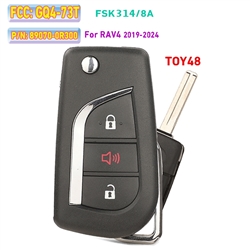
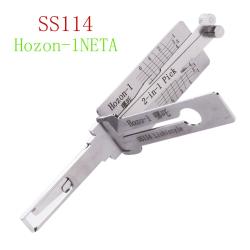








 Skype online
 Tina
Tina Alice
Alice Amy
Amy Mavis
Mavis
