SysInfo is an application for Motorola 680x0 based Classic Amiga and is used for getting information about the system like OS and library versions, hardware revisions and stuff.
Exactly 19 years after version 3.24 of SysInfo it's time for an update! The original author Nic Wilson has kindly given me permission to continue the maintenance of this old classic.
A
If you want information when new versions of SysInfo is available, please subscribe here.
Download latest Beta or Release Candidate here, please report bugs and feature requests:
The benchmark results provided by SysInfo is currently not verified on M68060 Amigas and useless in emulators set up to emulate faster than early classic amigas!
Two reports of 1 MB ECS Agnus (NTSC 8372A) identified as a 2 MB Agnus.
When using tools to rearrange windows, "dialogs" can be put behind the main window.
In WinUAE, when enabling "Fast as possible" & JIT it craches after Speed test when scrolling the libraries list.
I want more bug reports! Mail it to SysInfo (at) d0.se or use the contact form.
Changed handling of speed numbers, if big, don't print decimals
Replaced "Chip Speed vs A600" algoritm to use a lot less instructions and a lot more CHIP mem accesses resulting in a more relevant value. This results in significantly lower value for machines with instruction cache (68020+), which is more accurate because instruction cache should not affect CHIPMEM access speed.
Added support for AC68080 frequenc support
Update will no longer try to open 68040/68060.library when there is no such CPU
Bugfix: 68040/68060 non FPU guru fixed, again!
Lots of updates/corrections in the SysInfo.guide documentation.
The DRIVES/SCSI function was not 'Close'ing each drive that it 'Open'ed after the function was finished.
720p Link — Young Sheldon S01e19
: Sheldon's role as a "matchmaker" for Meemaw and Dr. Sturgis reveals his clinical view of family; he sees a potential grandfather as a biological asset to improve the family's "intellectual stock".
: The episode highlights the psychological impact of Sheldon’s intelligence on Missy and Georgie. Missy’s heartbreaking realization—"Sometimes I tell myself I only look stupid because he's so smart"—demonstrates the shadow Sheldon casts over his siblings' self-esteem. young sheldon s01e19 720p
While Sheldon is focused on subatomic particles, the episode secretly sets the stage for one of the show’s best subplots: the romance between Meemaw (Annie Potts) and Dr. Sturgis. When Meemaw drives Sheldon to the university, she catches the eye of the eccentric professor. Their initial interaction is charmingly awkward and provides a grounded, human contrast to Sheldon’s scientific obsessions. Viewing this in 720p ensures that the vibrant 1980s costume design and the warm tones of the Texas setting pop on screen. Why 720p is the Sweet Spot for Young Sheldon : Sheldon's role as a "matchmaker" for Meemaw and Dr
: The episode reinforces the theme of family support, as Meemaw dedicatedly drives Sheldon to his college courses, cementing the special "Moonpie" bond often referenced in The Big Bang Theory . Reception & Cultural Impact When Meemaw drives Sheldon to the university, she
The episode follows Sheldon as he hits a wall in his self-guided studies. Frustrated by the lack of challenge in his high school curriculum, he decides to petition to attend a college-level physics class. This leads him to the classroom of Dr. John Sturgis, a character who would become a cornerstone of the series. The 720p format captures the subtle comedic expressions of Wallace Shawn (Dr. Sturgis) and Iain Armitage (Sheldon) brilliantly, highlighting their instant quirky chemistry. The Introduction of Dr. John Sturgis
: Dr. Sturgis (played by Wallace Shawn) immediately takes an interest in Connie (Meemaw), who drives Sheldon to the campus. Their first date involves awkward chemistry over guacamole, which Sheldon encourages, hoping to "double the number of intelligent people" in his family.
: Feeling unchallenged at Medford High, 9-year-old Sheldon begins auditing a weekly college class on quantum chromodynamics taught by Dr. John Sturgis.


 APPS
APPS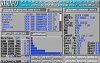
 download